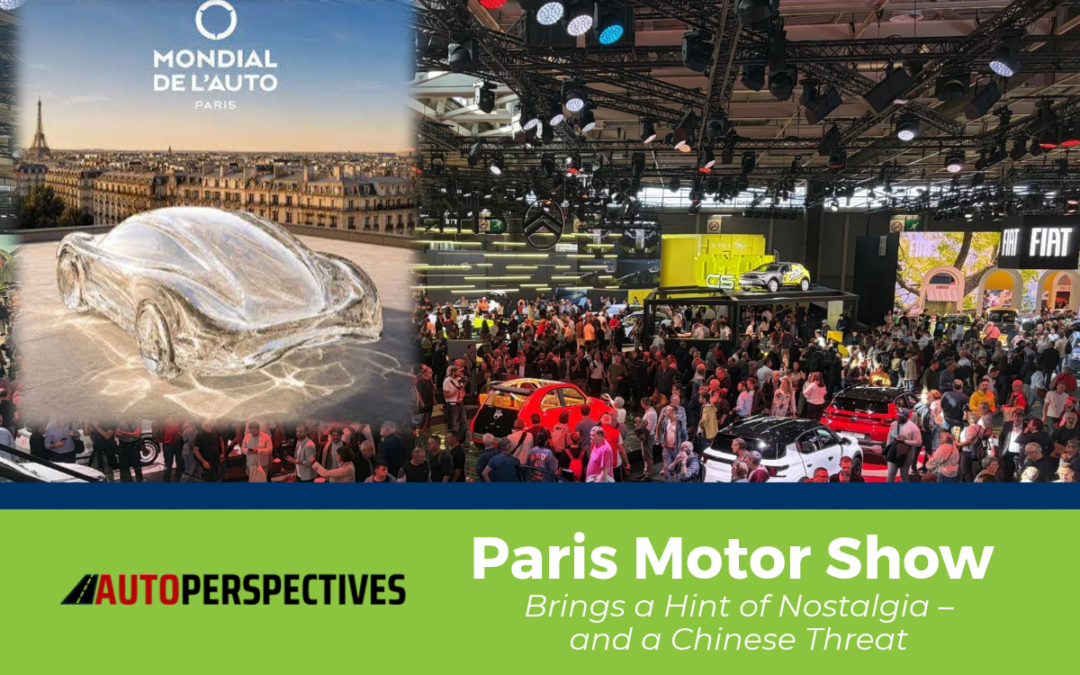
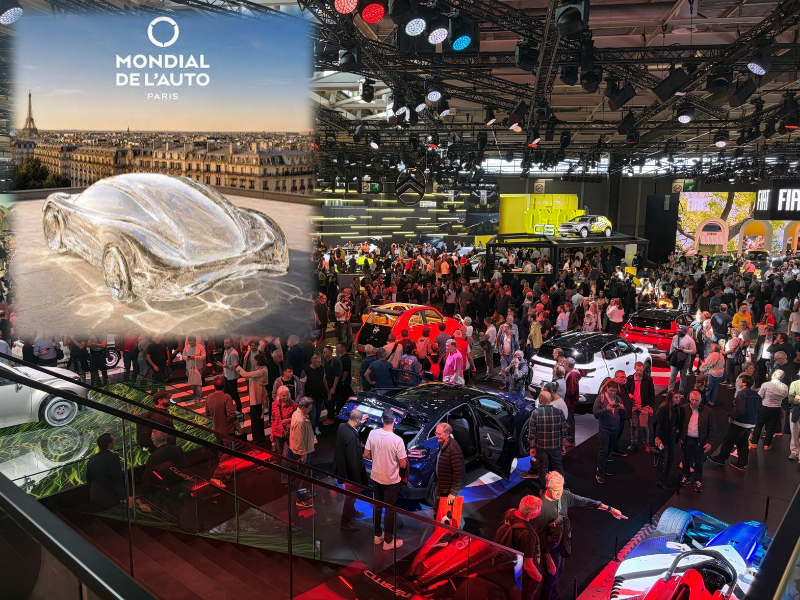
Auto industry pundits have been talking about the demise of the traditional auto show since COVID taught automakers that you can often make as much news with a virtual launch as with a live event. The withdrawal of automakers from many global venues – and the cancellation of the legendary Geneva Motor Show – added fuel to the fire. But while this year’s biennial Paris Motor Show was missing several key players (including BMW Group and all the Japanese brands), the automakers who showed up didn’t hold back.
Overview
Paris hosted the first motor show in the world (back in 1898), and the 2026 edition boasted 60 brands – 20 of them Chinese. The single media day was packed with both journalists and press conferences (back-to-back from 8 a.m. to 7 p.m.) and featured numerous production and concept vehicle debuts (including a few surprises). The first public day crowds were substantial as well, as officials estimated attendance of 500,000 over the show’s six-day run. And while some auto shows these days feature simple displays and little more than cars parked on carpet, Paris boasted innovative, colorful and engaging multilevel exhibits to showcase both product and technology.
The Chinese Threat
It was hard to ignore the Chinese, given the volume of products on display – and their exhibits were just as crowded as anyone else’s. But it’s worth noting the contrast between the fears of the past and what was on display this year. Many feared the Chinese would flood Europe with cheap cars, but that turned out to be only partially true. Yes, there are some very good Chinese EVs at the low end of the market, but you could also find Chinese-branded 200 mph sports cars, off-road-capable pickup trucks, and ultra-luxury SUVs. The Zeekr 9X, for example, starts at just under €120,000, actually more expensive than a comparable BMW X7 M60, and that includes an 897 hp plug-in hybrid powertrain, LIDAR-powered driver assist technology, and 1.3-million-pixel “Starlight matrix” headlamps. In addition, many of the Chinese press conferences featured variations on the phrase “In Europe, for Europe.” The Chinese brands don’t simply want to be seen as viable competitors to legacy brands, but also as good citizens. Whether it’s a plant in Hungary or a design center in Munich, the Chinese are investing for the long term, and they are looking to bring a full portfolio of products to market.
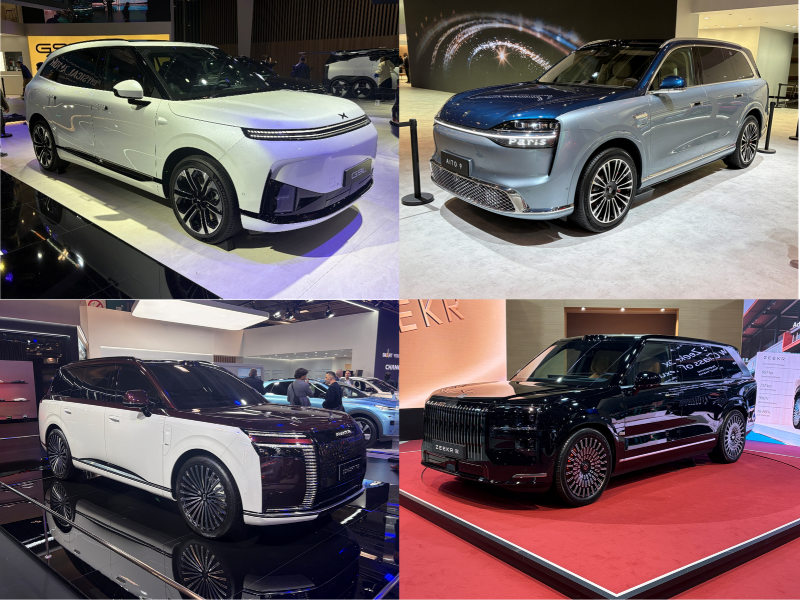
There were a few things missing from the Chinese playbook, however. While Stellantis, Renault, Hyundai, and others staged global debuts of new production or concept vehicles, the Chinese stands were largely populated by vehicles already on sale in China. In addition, legacy automakers largely turned up the ‘history’ dial and reached back into the past for inspiration—something the relatively young Chinese auto industry can’t do (yet). So, while Citroen rebooted the 2CV into an affordable EV and Renault reinvented the Espace MPV as an electric family car with an innovative interior layout, the Chinese vehicles remain largely interchangeable visually. If you swapped badges on the Aito 9 and the Avatr T09 – two full-size luxury SUVs targeting the Range Rover – few would likely notice.
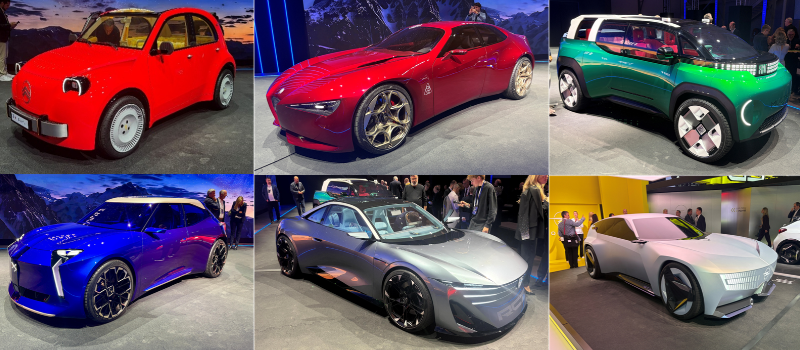
Stellantis’ Big Play
The biggest presence in Paris was Stellantis—not just because of its huge portfolio of brands, but because of the broad array of products it debuted at the show. Citroën’s 2CV, due in production in two years, was the undisputed star of the show. It will leverage the new “E-Car” platform (technical classification: M1E), inspired by Japan’s kei cars, intended to bring e-mobility to the masses – in this case, for only €15,000. The DS F3VER and Opel STX offer clues to future production B- and C-segment entries, while the Alfa Romeo Cuorerosso and Peugeot RCZ preview the design language for those brands’ next-generation products. Fiat’s Multiplay takes a new look at the once-popular MPV segment and is rumored for production – but the shape-shifting body (that transforms into a pickup) may be a bridge too far to execute. But curiously missing from Stellantis’ display was Maserati, which was reported to be developing a concept car several months ago. In the spring, Stellantis announced there would be a new Maserati strategy announced in December (now rumored to involve China’s JAC and Huawei), and it appears we’ll all have to wait until then for more details
Other Notable Debuts
Hyundai chose Paris for its second-generation Bayon small SUV, a model specifically targeted at Europe and India. Although it didn’t bring any significant new innovations to segment, it builds on Hyundai’s “Art of Steel” design language, with a bulkier, more aggressive design and a new hybrid option. Smart reached into its past for its newest model, with the #2 rebooting the ForTwo (the original Smart model) as an electric-only city car. While the original Smart was a joint venture between Mercedes-Benz and watchmaker Swatch, the new entity is a Geely/Mercedes-Benz partnership, leveraging Geely hardware and manufacturing with Mercedes-Benz design and marketing. The #2 joins an existing portfolio of small, midsize and compact SUVs sold in China and Europe, and features the same unique design (and an updated “Tridion safety cell”) as the original.
Trends and Observations
Industry observers and automakers have noted one advantage that legacy automakers have over the Chinese, and that’s the idea of legacy itself. While Chinese vehicles are often attractive—and less imitative of legacy brands than a decade ago – they are still building their brand with many customers. Paris saw automakers reach back to 1984, 1971, and even 1948 to pull forward themes and design cues that they felt would resonate with today’s buyers. Jeep CEO Xavier Peugeot, responding to rumors that Jeep might resurrect the Willys as an affordable EV, noted that was “a key card to play in the fightback against the Chinese newcomers”—and so it seems likely we will be seeing more of that in the future.
Another emerging trend is the reinvention of the dashboard. After five or more years of twin-screen layouts (one instrument cluster and one touchscreen), whether it’s a Kia K4, Ford Mustang or a Chevrolet Silverado, automakers are looking at new alternatives. The Peugeot E-T16 concept shows a nearly production-ready execution of its Hypersquare interior that will show up on next year’s 208 small hatchback. It features a rectangular steering control (with four symmetrical thumb-operated control rings in the corners) and a new steer-by-wire system. Renault’s E-Space and Fiat’s Multiplay featured a full-width display along the base of the windshield (like BMW’s Panoramic iDrive) and a small control pod and touchscreen in front of the driver to free up front seat space. There are, of course, safety-related concerns to take into account, but it’s refreshing to see some innovation and diversity of design in automotive interiors.
Notably absent from the show were any significant powertrain announcements or innovations. Several of the concepts on display didn’t even run (or have an interior), and some automakers simply chose to not discuss what was under the hood. Electric vehicle sales have jumped in recent months with the spike in fuel prices, and so there were plenty of EVs on display in just about every exhibit, but there was no discussion about improvements in motor, battery, or charging technology.
So, while this year’s Paris Motor Show didn’t quite provide the complete snapshot of the auto industry that we used to get, there was plenty to see and hear – and get excited about. It also offers a ray of hope for those of us who remember the “classic” auto shows; while the industry will never return to the good old days, it seems this particular medium may be getting a new lease on life.
Meet the Author:

Adam Bernard — Founder & Principal, AutoPerspectives
Adam is an automotive analyst, writer, and speaker with more than 40 years of industry experience, including a distinguished career at General Motors, where he helped lead the company’s global competitive intelligence efforts. He holds a mechanical engineering degree from MIT and an MBA from Harvard Business School and has taught automotive design strategy at Detroit’s College for Creative Studies. Adam currently serves as President of the Society of Automotive Analysts and the Detroit region of the Lambda Car Club.